Vestiari is the intelligent digital closet that turns your clothes into data-driven outfits. By maximizing every item you already own, we help you eliminate waste and build a personal style that respects the planet as much as your aesthetic.
See how it works →The Three Pillars
Digital Curation
Build a museum-quality inventory. Every garment is cataloged with precision—colors, seasons, and condition—creating a clean, visual map of your style.
Style Intelligence
Beyond the clothes. Vestiari considers your body type and skin temperature to provide recommendations that actually flatter, turning your closet into a personalized boutique.
Intentional Optimization
Move beyond "fast fashion." Track usage to identify "ghost garments," plan your daily outfits, and intelligently manage items to sell, donate, or wear more.
Intelligence at Your Service
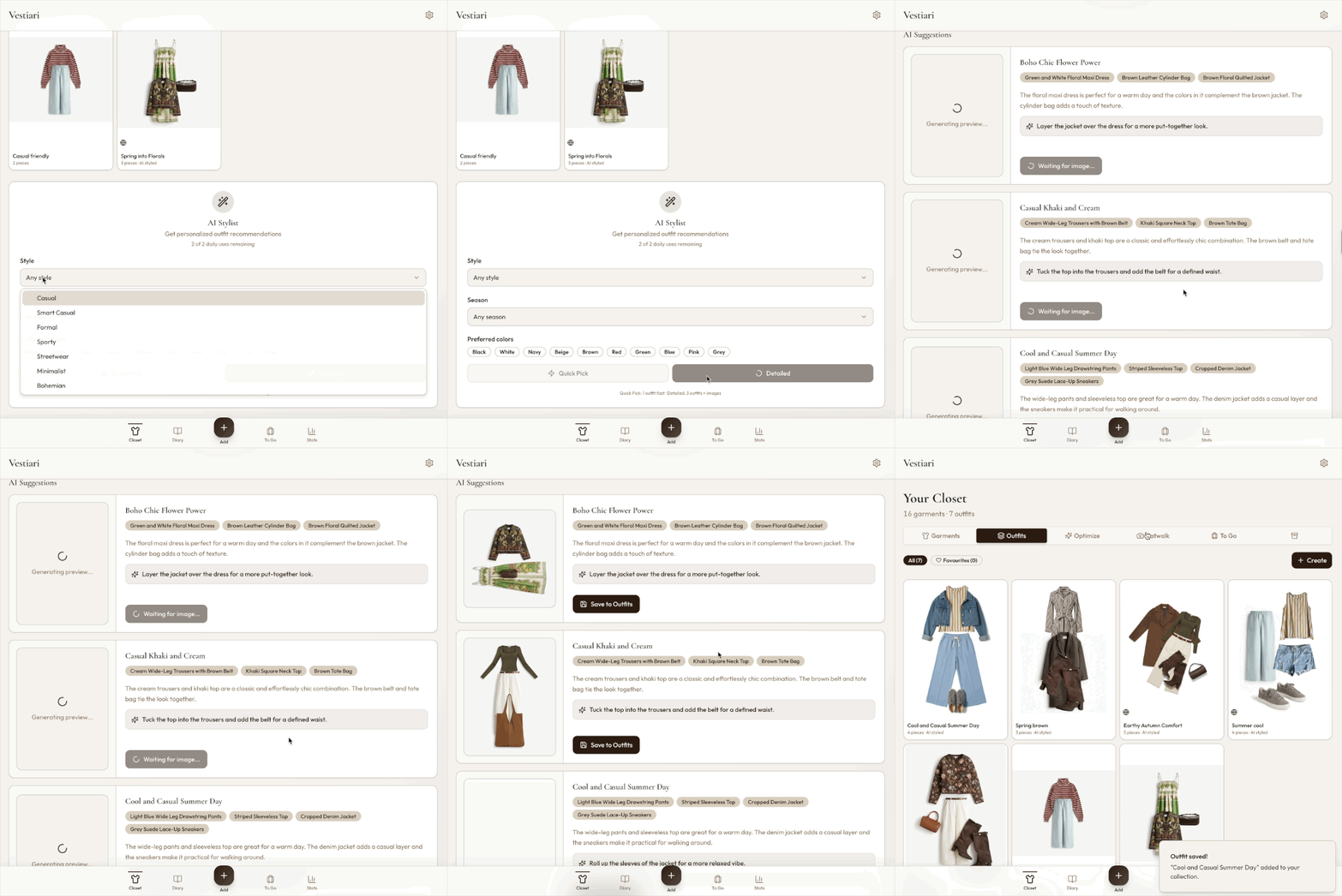
Your wardrobe, professionally styled. Get intelligent outfit suggestions tailored to your unique body profile, skin temperature, and style identity—curated for you, not the trends.
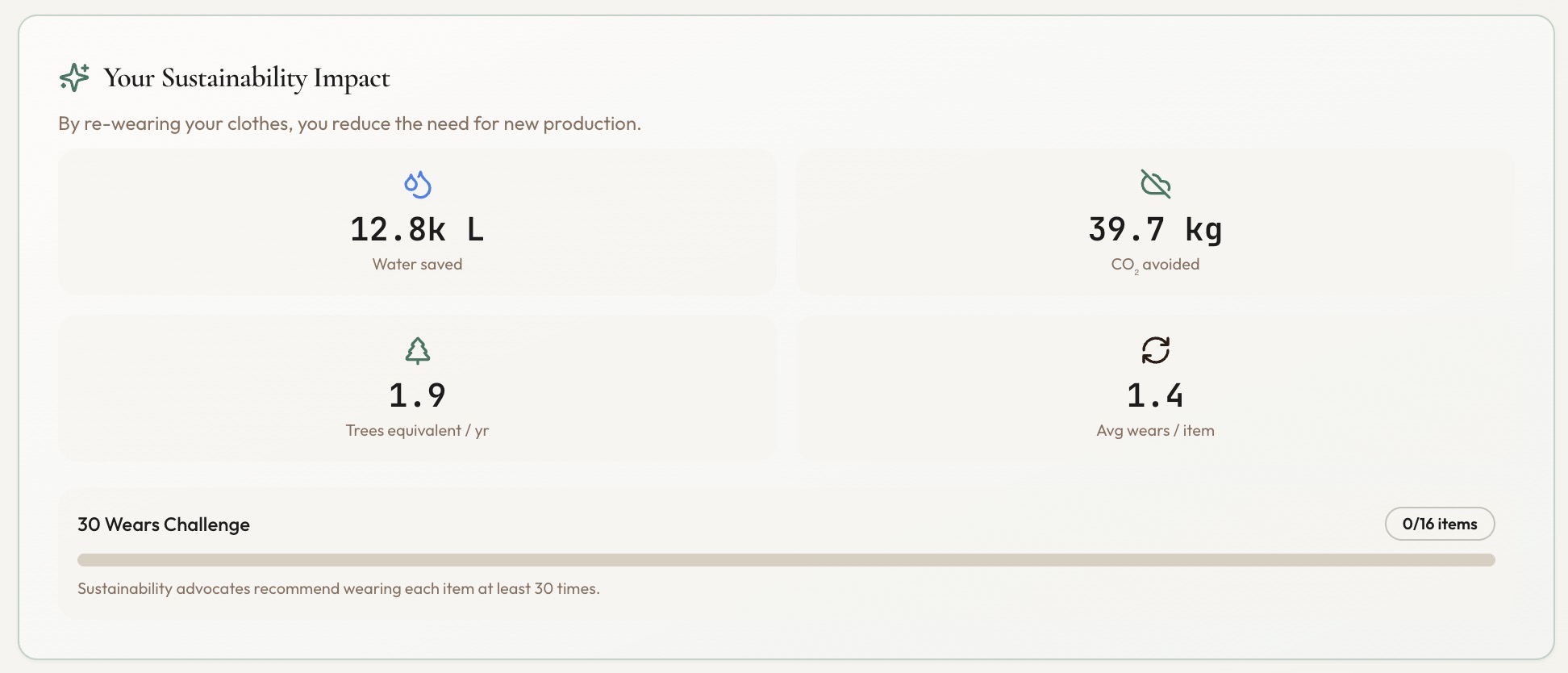
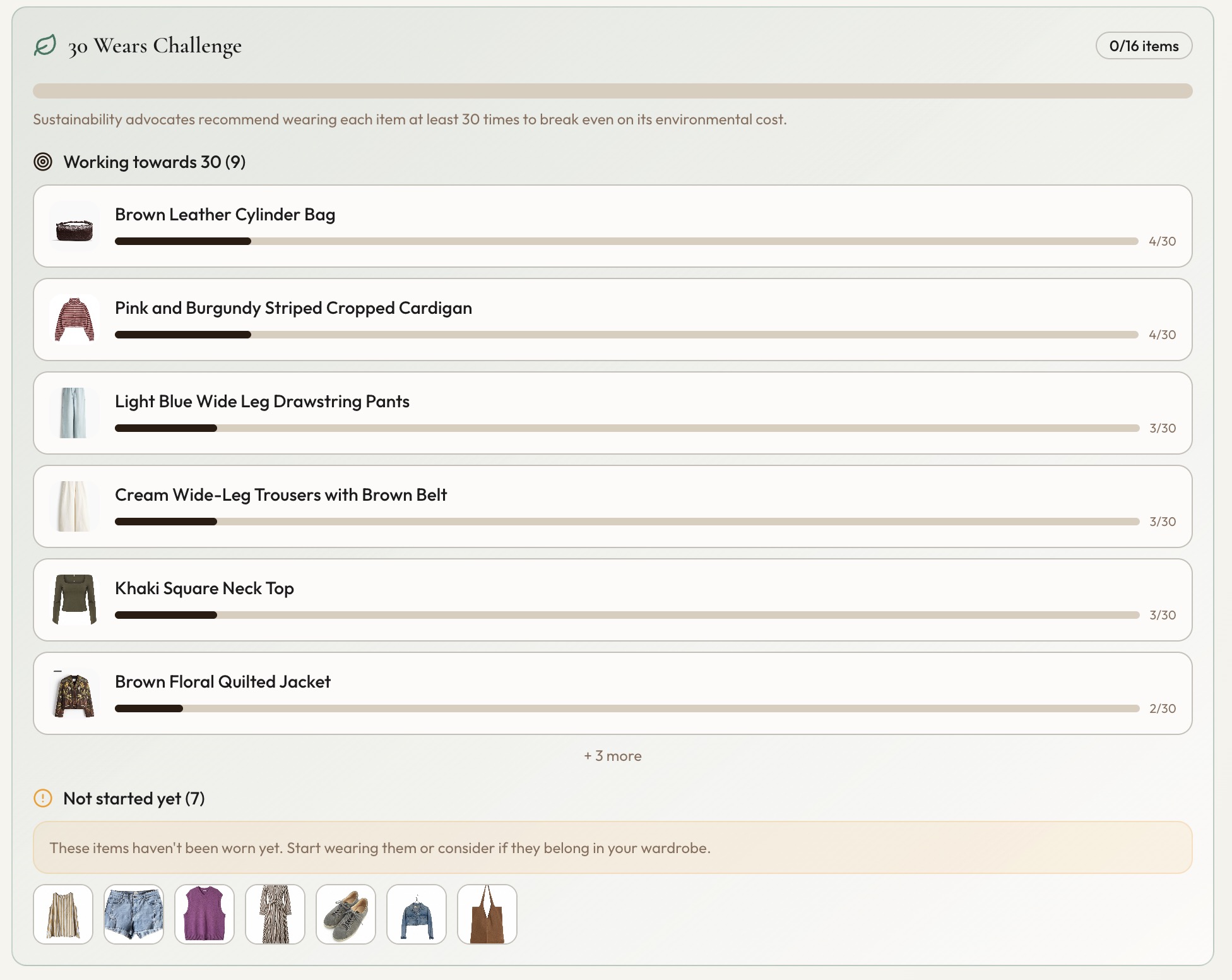
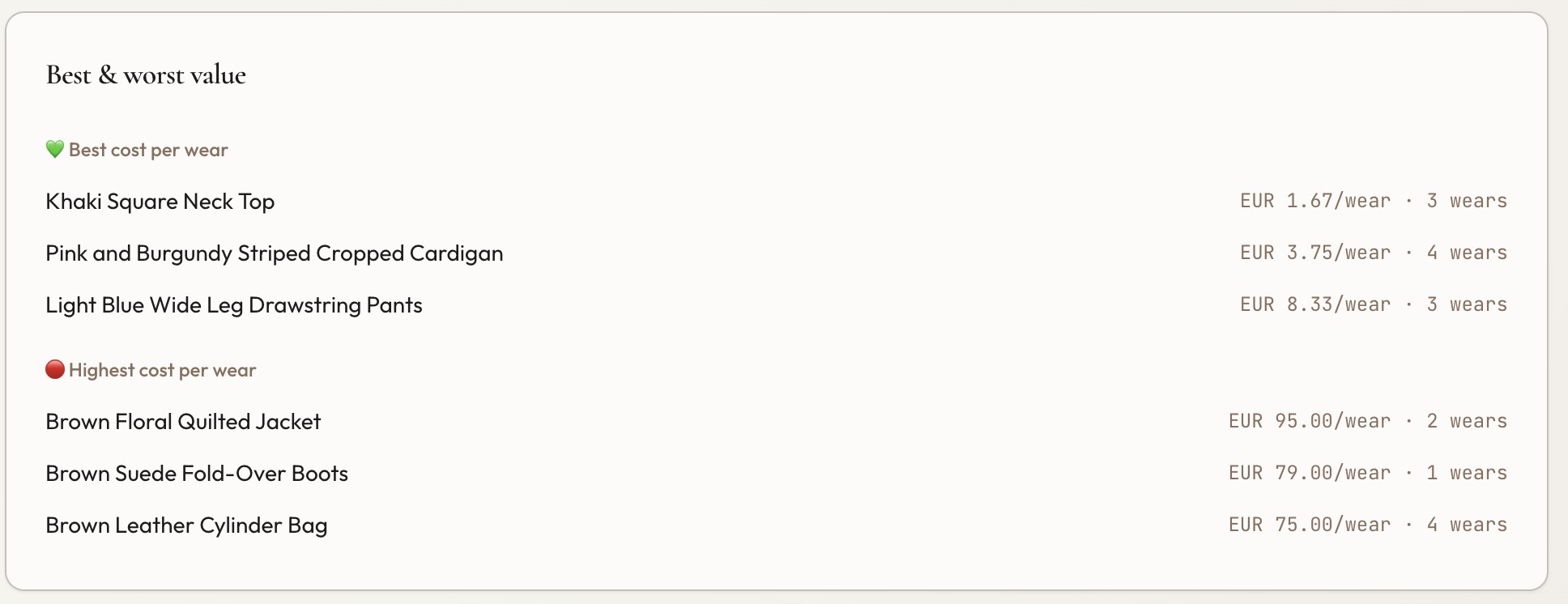
Deep-dive analytics at your fingertips. From cost-per-wear tracking to seasonal gap analysis, turn your closet data into clear insights on what to keep and what to skip.
Log your daily wear and plan your future looks. Effortlessly track items to sell, donate, or rediscover, keeping your archive lean, circular, and intentional.
Add garments in seconds. AI automatically removes backgrounds for clean visuals and intelligently tags colors, seasons, and garment type—so you can focus on styling, not data entry.
Travel lighter and arrive sharper. Seamlessly export your archive into high-impact, low-volume packing capsules that ensure you dress effortlessly for any destination.
See before you step out. Upload a full-body photo and preview how any outfit from your archive looks on you—powered by AI virtual try-on.
Invest in Your Archive
Free for all beta testers. No credit card needed.
Advanced intelligence for the intentional wardrobe.
Build your wardrobe little by little
With 30 background removals and 40 AI garment processings per month, grow your digital closet at your own pace.
We believe the most sustainable wardrobe is the one you already have—once it is fully understood. By knowing exactly what you own, how it fits your body, and how often you wear it, you stop the cycle of overconsumption. That's not a feature. That's a philosophy.

The Numbers Don't Lie
The fashion industry is the world's second-largest polluter. Every garment carries an invisible environmental debt—one that grows when we discard instead of re-wear.
7×
Average times a garment is worn before being discarded
-36%
Decline in garment usage since 2000 due to fast fashion
44%
Reduction in emissions by simply doubling garment use
1/sec
One garbage truck of textiles landfilled every second
The Environmental Debt of a Single Garment
Cotton T-Shirt
Eco break-even: 30 wears
water
CO₂
Pair of Jeans
Eco break-even: ~50 wears
water
CO₂
Polyester Shirt
Eco break-even: 30 wears
water
CO₂
Leather Shoes
Eco break-even: ~100 wears
water
CO₂
Washing synthetic fabrics releases up to 700,000 microplastic fibers per single load.
Textile dyeing is the 2nd largest water polluter globally, after agriculture.
The average piece of clothing is discarded after just 7-10 uses — the #30Wears rule sets the minimum for a responsible purchase.
Since 2000, clothing production has doubled while usage per garment has dropped by over a third.
Pack smarter, dress better, and own less.
Sources: Ellen MacArthur Foundation, WRAP, Livia Firth's #30Wears campaign
No. You can start with a handful of pieces and build your archive over time. That said, the more you add, the more useful the ghost garment detection, cost-per-wear tracking, and outfit suggestions become.
Vestiari is currently a web app accessible from any browser on your phone or desktop. No download needed. It will be released soon on iOS and Android.
Your Sustainability Score is a single number that reflects how well you're using what you own. It improves every time you rewear a forgotten piece, hit a wear milestone, or rehome something rather than buy new. It's a mirror that shows you, honestly, how much of your wardrobe's environmental debt you're actually paying off through use.
Because building your digital archive is mostly a one-time effort. The yearly plan gives you a large annual allowance of 300 background removals and 300 garment analyses, so you can photograph your entire wardrobe at once without running out of credits mid-session.
It's a fair question — and one we take seriously enough to be fully transparent about.
Vestiari runs on Google's Gemini models, and according to Google's own published research, the median Gemini text prompt emits just 0.03g of CO₂e and uses about five drops of water. Image-based calls like background removal emit roughly 0.09g of CO₂e per call.
Here's what that means for a Pro user who burns every single AI credit in a month: Total energy ~55 Wh, Total CO₂e ~6.7g, Total water ~59ml.
To put that in context: sending 2 emails ≈ 8g CO₂e, watching 1 hour of Netflix ≈ 36g, producing 1 cotton t-shirt ≈ 2,100g, producing 1 pair of jeans ≈ 33,400g. Vestiari Pro, max AI usage, full month ≈ 6.7g.
The net equation is simple: one extra wear of a forgotten garment saves approximately 300g of CO₂e — 45 times more than the entire monthly AI cost of using Vestiari. The AI pays for its own carbon footprint the moment it helps you rediscover something you already own. Every wear logged after that is pure environmental gain.
We're not going to pretend AI has zero impact: it doesn't. But we also believe that the biggest barrier to sustainable fashion isn't information, it's friction. Most people know they should wear what they own. The AI in Vestiari exists to remove that friction, not to add sparkle.
That said, if our community tells us the AI features create more harm than good, we will listen. We are genuinely open to reducing, reshaping, or removing AI features based on user feedback. Our commitment is to sustainability first, technology second. We'd rather build a simpler tool that changes behaviour than a sophisticated one that compromises our values.
Sustainability isn't about being perfect. It's about doing something.
Sources: Google AI Environmental Impact Report, August 2025 · Ellen MacArthur Foundation · WRAP
Made with ❤️ and intention by
Valen
A marketer with over 15 years of experience who has traveled the world with a bag of no more than 10 clothes. She loves fashion and secondhand purchases, has ADHD, and enjoys data and understanding how her world works.
More about me